
Sky-high gold jwellery prices will haunt buyers in 2010 also though India is better placed than its global peers, where people are slowly turning back to purchases, according to World Gold Council.

The World Gold Council has suggested that banks be allowed to offer gold-backed saving products to channelise gold investments in the banking sector.

The overall gold demand during the second quarter of 2013 stood at 1,148 tonnes, the World Gold Council Q2 Demand Trends report said.

The RBI on Wednesday eased gold import norms by allowing select trading houses, in addition to already permitted banks, to procure the precious metal to boost exports.
The demand for the precious metal stood at 202.1 tonnes in the same quarter last year.
While gold consumption is expected to stabilise this year, it may be some time before it revisits record levels seen in the depths of the financial crisis.
Slump after 5 quarters amid high prices, rupee depreciation.

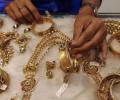
Indian jewellery is widely prized for intricacy and craftsmanship.

The overall third quarter demand in the country for 2013 stood at 161.6 tonnes, WGC Gold Demand Trends report showed.

Gold demand in rural India is expected to be lower this year with weak monsoon affecting household savings, according to the World Gold Council (WGC).

In domestic market, gold prices had peaked to Rs 39,011 per 10 grams in September and are now ruling at Rs 38,800 per 10 gram.

Gold demand in India -- one of most avid purchasers -- is interwoven with culture, tradition, the desire for beauty and the desire for financial protection.

In 2012, Q4, the country's demand for the yellow metal during stood at 260.3 tonnes and for the entire year it was 863 tonnes.

India's gold demand recovered during the January-March period to witness a growth of 37 per cent at 140 tonne compared to the same quarter of 2020, due to ease of COVID-related restrictions, pent up demand and softening of prices of the yellow metal, according to the World Gold Council (WGC). The overall gold demand stood at 102 tonne during the first quarter of 2020, as per WGC data. Gold demand in value terms increased by 57 per cent during the first quarter of this calendar year to Rs 58,800 crore compared to Rs 37,580 crore in the corresponding period of 2020.

Gold demand in India is expected to be robust in 2014, likely leading to a further jump in smuggling if curbs on bullion imports remain, the World Gold Council (WGC) said.

Globally, jewellery buying fell 14%, investment slid 11%.

Forecasts of a further rise in bullion prices keep Indians away from selling gold.
Indian overtakes China in gold consumption.

Gold demand in India dropped by 30 per cent during the July-September quarter to 86.6 tonnes, compared to the same period last year due to Covid-19 related disruptions and ruling high prices, the World Gold Council (WGC) said in a report.

Global gold demand hit an 11-year low in 2020 at 3,759.6 tonnes, mainly due to a weak October-December quarter and the COVID-19 related disruptions across the world driving a muted consumer sentiment throughout the year, the World Gold Council (WGC) said in a report. The overall consumer demand during 2019 was at 4,386.4 tonnes, while in 2009 the overall demand was at 3,385.8 tonnes, according the WGC's 2020 Gold Demand Trends report. Global gold demand dropped by 28 per cent year-on-year (YoY) to 783.4 tonnes in the fourth quarter compared to 1,082.9 tonnes during the October-December period of 2019, the report stated.

Some antique jewellery is displayed in a couple of museums in the world.
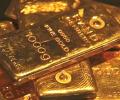
However, in 2020, gold demand in India -- the world's second biggest consumer after China -- could increase to 700-800 tonnes on hopes of increased acceptance of high price level and likely economic reforms boosting consumer confidence, World Gold Council said.
They are now scaling or shutting down their businesses because they can't compete with untaxed grey market gold. India's gold smuggling has increased significantly since the import duty was increased in the Union Budget 2019 in contravention with the broader market expectations of a cut.

Pre-Diwali Dhanteras sales of gold and silver witnessed a tepid response from consumers on Thursday on account of high prices of the precious metals and sluggish demand due to COVID-19 induced economic hardship, according to jewellers and industry experts. However, jewellers are expecting maximum footfalls on Friday as Dhanteras -- considered the most auspicious day in Hindu calendar for buying items, ranging from precious metals like gold and silver to utensils -- is being celebrated for two days this year.

In April and May, there were additions by RBI of 600 kg and 900 kg. RBI's total gold holding is now 561.9 tonnes.

Gold was Rs 28,100 per 10 gm on July 26, 2014.

Gold demand will go up in the second half of this year.

It rose to 310 tonnes in the second quarter ended June.

Regaining the lost sheen, sales of gold jewellery and coins are set to touch pre-COVID levels in volume terms on the auspicious Dhanteras as easing pandemic concerns and pent up demand saw consumers flocking to stores to buy the precious metal. Increased footfall at stores and brisk sales online as well as relatively softer gold prices compared to record Rs 57,000 per 10 grams level in August spurred increased buying, especially light weight offerings, on Tuesday. Dhanteras is considered to be auspicious for buying precious metals and other valuable items.

In August 2013, import duties on gold, silver and platinum were hiked to 10 per cent in order to curb the surging imports and also to check CAD.

WGC expects demand to revive in H2 on surplus monsoon rains

India imported 769 tonnes of gold in 2014, down from 825 tonnes in 2013.

Going ahead, the likely implementation of the goods and services tax bill in July and how the monsoons play out will have a bearing on India's demand for gold and gold jewellery

Recycling in India fell by 22 per cent to 14 tonnes against 18 tonnes.
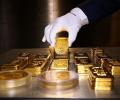
Gold demand appears to be positive in India as the consumer sentiment is likely to recover in 2021, from its dismal performance due to the coronavirus pandemic-related disruptions and volatile price movement, according to a report by the World Gold Council (WGC). Initial data about the Dhanteras festival in November suggest that while jewellery demand was still below average, it had substantially recovered from the lows seen in the second quarter (April-June 2020) of last year, according to the report.

Confidence had ebbed in the last few years due to default by some errant domestic retailers and exporters. Moreover, many jewellers are believed to have diverted the fund collected through monthly deposit schemes to pay 'mark-to-market' margins on various loans.

India's biggest jewellers' association has asked members to stop selling gold bars and coins.
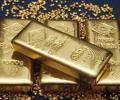
This is good news for the central government at a time when crude oil prices are rising.
Consumers during the quarter sold 37.9 tonnes of old gold, which is the highest quarterly sale after September 2016, when old gold sale, or scrap supply, was 39 tonnes.

The proposed bullion bank can help settle gold loan accounts in gold terms, and promote existing gold schemes, along with launching schemes including gold-recurring deposits.
 © 2026 Rediff.com - Advertise with us - Disclaimer - Privacy Policy - Sitemap - Feedback - About us - Terms of use - Grievances